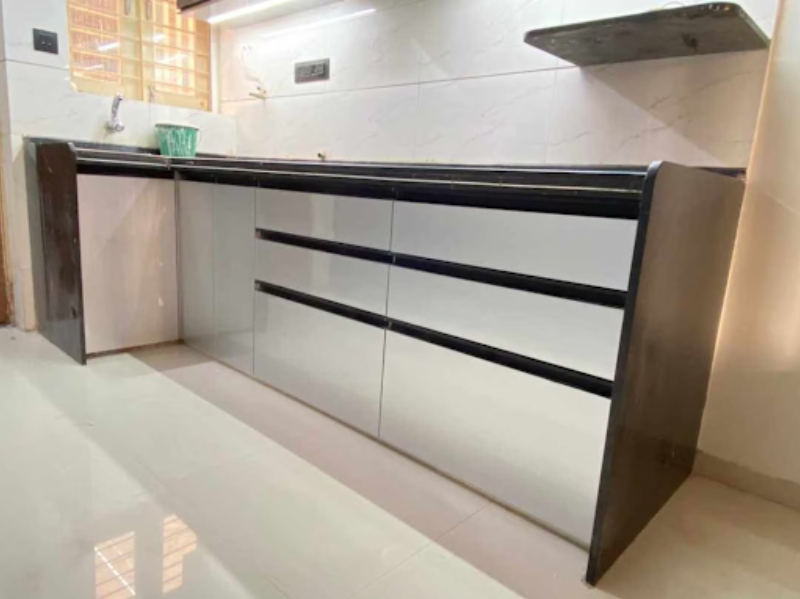
A Kitchen Trolley can significantly improve kitchen organisation, but only when the drawers and baskets correspond to how the household actually cooks. Simply installing the maximum number of accessories can increase cost without necessarily making the kitchen more convenient.
For homeowners in Tathawade, Maharashtra, evaluating trolley layouts before finalising cabinetry can help create a kitchen that is easier to organise and maintain.
Identify What Needs Drawer Storage
Begin by listing the items used most frequently.
Cutlery, plates, cooking utensils, pots, pans, spices, bottles, and dry ingredients all require different storage dimensions.
A typical kitchen may benefit from separate zones for:
- Cutlery
- Plates and bowls
- Cooking utensils
- Pots and pans
- Bottles
- Frequently used ingredients
- Cleaning supplies
The exact arrangement should reflect household cooking habits rather than a standard package.
Position Frequently Used Items Near Their Activity Zone
Storage becomes more efficient when items are kept close to where they are used.
Cooking utensils and spices may be positioned near the hob. Plates can be stored near the serving area. Cleaning supplies should generally remain near the sink but separated appropriately from food storage.
This reduces unnecessary movement during cooking.
Drawer Depth Matters
Deep drawers are useful for large cookware but inefficient for small cutlery. Shallow drawers work well for smaller items but cannot accommodate bulky vessels.
A combination of drawer heights usually provides better storage than making every drawer identical.
Homeowners should also consider the weight of items being stored because heavy cookware requires suitable drawer systems and hardware.
Corner Storage Needs Realistic Expectations
Kitchen corners often attract specialised accessories because standard shelves can be difficult to access.
Corner mechanisms can improve reach, but they occupy internal space and have specific installation requirements.
Before choosing one, consider whether the mechanism suits the cabinet dimensions, what will be stored there, and how frequently it will be used.
Sometimes a simpler solution is more practical than an elaborate accessory.
Check Hardware Quality
The visible finish is only part of a kitchen trolley system.
Runners and other moving components affect how smoothly drawers operate, particularly when loaded with heavy cookware.
Homeowners should understand the specified hardware, load suitability, and maintenance requirements before approving the design.
Soft-closing systems can improve everyday comfort, but installation quality remains equally important.
Keep Cleaning in Mind
Kitchens inevitably experience crumbs, oil, moisture, and spills.
Trolley systems should be reasonably easy to access for cleaning. Extremely complicated internal accessories may become inconvenient if parts are difficult to reach.
The cabinet material, drawer base, basket type, and internal surfaces should all be considered from a maintenance perspective.
Avoid Selecting Accessories From Display Kitchens Alone
Showroom kitchens are designed to demonstrate possibilities. A feature that looks attractive in a display may not necessarily solve a problem in your kitchen.
For a home in Tathawade, available dimensions, family size, cooking frequency, appliance placement, and food-storage habits should determine the final selection.
Veer Modular Kitchen can plan trolley arrangements as part of a customised kitchen configuration, but homeowners should still discuss what each drawer or accessory is intended to store.
A well-planned Kitchen Trolley is ultimately about reducing effort. When frequently used items have logical positions and drawer dimensions match their contents, the kitchen stays organised more naturally and everyday cooking becomes easier.
Keywords