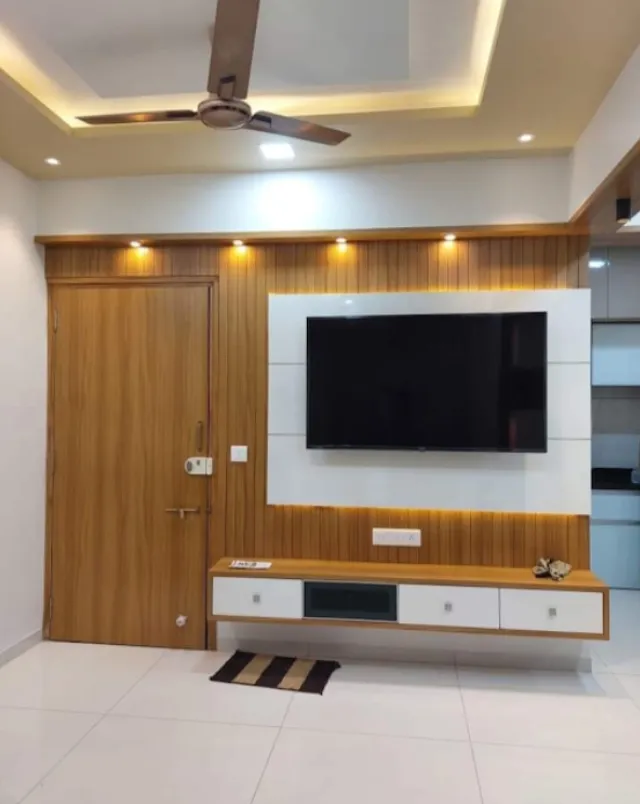
A well-planned TV unit can do much more than provide a surface for a television. In contemporary homes, it can organise entertainment devices, conceal cables, create storage, and visually anchor the living room without making the wall feel overcrowded.
For homeowners in Marunji, Maharashtra, especially those furnishing newer apartments, planning the TV area early can prevent exposed wiring and unnecessary furniture additions later.
Start With Viewing Requirements
The television should be positioned according to the room layout and normal seating arrangement.
Before deciding the height and width of a TV unit, consider:
- Television screen size
- Sofa position
- Viewing distance
- Electrical sockets
- Cable connections
- Router placement
- Sound system requirements
- Natural light entering the room
Installing the television too high may make everyday viewing uncomfortable, while poor positioning near windows can create reflections.
Decide How Much Storage You Actually Need
Some households need substantial entertainment storage, while others use streaming services and require very little.
A family with gaming consoles, speakers, set-top boxes, remotes, books, and decorative accessories may benefit from drawers and cabinets. A household that prefers a minimalist interior may need only a floating console with concealed wiring.
The goal should be to provide enough storage without covering the entire wall unnecessarily.
Concealed Wiring Creates a Cleaner Finish
Loose cables are one of the most common problems around television walls.
Cable management should ideally be discussed before the unit is manufactured. Electrical sockets and conduits can then be positioned according to the television and connected devices.
It is also important to maintain access. Completely sealing electrical connections behind decorative panels can create problems when a cable, adapter, or device needs replacement.
Floating Units Can Make Compact Rooms Feel Lighter
Wall-mounted consoles keep part of the floor visible and can create a less bulky appearance in smaller living rooms.
They may also make floor cleaning easier. However, wall strength and installation requirements should be assessed before mounting heavy units or televisions.
Floor-supported cabinetry can provide greater storage capacity where space permits.
Materials Influence the Overall Character
The TV wall does not need to use the same finish throughout.
Wood-inspired laminates can create warmth, while neutral finishes can produce a restrained contemporary look. Fluted details, glass, panels, subtle lighting, and selected wall finishes can add visual interest when used carefully.
The design should complement nearby furniture rather than compete with it.
Avoid Overdesigning the Wall
A TV wall often occupies a prominent position in the living room, making it tempting to add multiple shelves, textures, lights, panels, and decorative elements.
Too many features can make the space visually busy.
A better approach is to decide what the wall needs to accomplish first. If storage is the priority, cabinetry can dominate the design. If the room already has sufficient storage, the TV unit can remain simpler.
Plan Around the Entire Living Room
The television wall should be considered alongside seating, circulation, curtains, doors, lighting, and other furniture.
In Marunji apartments with open living and dining areas, this becomes particularly important because several functional zones are visible simultaneously.
The most successful TV unit designs combine viewing comfort, organised storage, cable management, and visual proportion. Veer Modular Kitchen can incorporate such units into broader interior planning where homeowners want coordinated furniture solutions.
Instead of selecting a design only from a photograph, adapting it to the dimensions and everyday use of the actual room usually creates a more practical result.
Keywords