Acrylic usually describes the visible door or drawer finish, not the cabinet structure beneath it, so appearance alone cannot tell you whether a kitchen will withstand water, heat, cleaning and daily use. By the end, you will know how to compare acrylic with other finishes, inspect quality, protect vulnerable areas and decide whether its maintenance demands suit your home.
Key takeaways
- Check the acrylic edge, substrate, bonding and colour consistency in the showroom.
- Choose acrylic for a high-gloss look, but expect fingerprints and visible scratches.
- Keep acrylic away from direct heat, standing water and abrasive cleaners.
- Use moisture-resistant boards and reliable edge sealing near sinks and dishwashers.
What an Acrylic Kitchen Front Is Made Of
An acrylic modular kitchen usually means acrylic on the door and drawer front, not an acrylic cabinet throughout. The visible layer may be a solid acrylic sheet bonded to a board, or an acrylic laminate-faced panel with a thinner decorative layer over MDF, HDF, HDHMR, plywood or another engineered-wood substrate.
| Construction | What you are buying | Durability implication |
|---|---|---|
| Acrylic sheet on board | A thicker acrylic face fixed to MDF, plywood or another core | The sheet may tolerate limited polishing, but the core still controls swelling and screw-holding strength |
| Acrylic laminate-faced panel | A factory-finished acrylic layer bonded to an engineered-wood panel | Scratches or peeling may require complete front replacement rather than refinishing |
| Unsealed board edge | Exposed MDF, HDF or plywood at a cut-out, joint or hole | Water can enter quickly, causing swelling beneath an intact acrylic face |
The front is assembled with adhesive, so adhesive coverage and curing affect delamination. Edge banding covers vulnerable panel edges; inspect whether it is continuous, tightly joined and sealed around sink cut-outs and hinge recesses.
High-gloss acrylic reflects light and can brighten a compact room, but fingerprints, grease and fine scratches stand out. Matte acrylic reduces reflections and handling marks, although dust can remain visible on dark colours.
An acrylic face does not make MDF kitchen cabinets waterproof, low-emission or fire-rated. Ask for the actual board specification, formaldehyde certification, adhesive details and, where relevant, the finished-product fire-test classification—not only a claim for the raw acrylic sheet.
How Acrylic Compares With Other Kitchen Finishes
Acrylic offers a practical advantage when you want a sleek, bright surface and quick wipe-downs, but it exposes fingerprints, dust and fine scratches more clearly than textured or matte finishes.
| Option | Appearance and handling | Moisture, fading and repair |
|---|---|---|
| Acrylic | Reflective, strong colour impact; fingerprints and fine scratches show | Protect edges from water; solid sheet may polish, laminated fronts usually need replacement |
| Laminate | Textured and matte choices hide handling marks and dust better | Good everyday durability; replace damaged panels rather than refinish |
| Membrane kitchen cabinets | Seamless shaped fronts with fewer visible joints | Heat and edge lifting demand care; replacement is the usual repair |
| PET kitchen finish | Smooth, contemporary colour with less mirror-like reflection | Check UV performance; damaged film is generally replaced |
| PU-painted kitchen cabinets | Continuous colour and custom sheen; marks depend on gloss level | Can be refinished professionally, but matching colour and sheen is difficult |
| Veneer | Natural wood variation, not a uniform colour field | Seal exposed edges; fading and refinishing depend on the wood and coating |
Use this checklist before specifying acrylic in high-use locations:
- Sink cabinets and dishwasher-adjacent units need sealed edges, cut-outs and screw holes; remove standing water promptly.
- Hob surrounds require appliance-manufacturer clearances and materials specified for heat exposure. A glossy face is not a fire rating.
- Corner units need clearance for handles and opening doors; a reflective finish cannot fix obstructed access.
- Kitchen-trolley fronts face knocks and scraping, so textured laminate or matte finishes may be the safer choice.
Acrylic suits careful households that accept regular fingerprint cleaning. It is weaker where doors become work surfaces or meet children’s toys, utensils and frequent abrasion.
How to Test Acrylic Quality in a Showroom
A kitchen showroom inspection should test complete doors and drawers, not just a perfect display panel. Use this acrylic kitchen quality check before approving the design or placing an order:
1. Stand several doors together and check that door edges align, gaps stay even, and drawer fronts sit on one plane. Compare colour and gloss across panels; replacements from another batch can look different.
2. View each glossy surface from an angle. Straight reflections indicate a flat panel; wavy reflections suggest distortion. Look closely for visible seams, joins, peeling corners, bubbles, chipped areas or exposed substrate.
3. Inspect cut-outs for sinks, appliances and handles. Check that acrylic edge banding is continuous, firmly bonded and neatly trimmed, with no open joint or raw board. Open the doors and confirm hinge-side clearances; pull every drawer to check front alignment.
4. Touch one sample with clean fingers, then oily fingers. Wipe it with a soft cloth and mild soapy water. Reject a finish that marks easily, feels loose at an edge or cannot be cleaned without streaking.
5. Request the product code, colour reference, manufacturer, acrylic panel thickness, adhesive system and board grade in writing. Ask how the supplier handles a damaged or discontinued door, including the replacement-panel policy and spare hardware.
Keep these records: ageing, production batches, suppliers and sheet thicknesses can make a later colour match visibly wrong.
Cleaning, Heat and Water: Where Acrylic Needs Care
Use this method for how to clean acrylic kitchen cabinets: wipe fingerprints, dust and grease film with a soft, clean cloth dampened with water and mild soap or detergent, then dry the surface. Do not use abrasive powders, steel wool, rough scrub pads, solvent cleaners or harsh chemicals; check the cleaner’s instructions first.
These products can dull or craze the finish.
1. Treat acrylic kitchen maintenance as damage prevention. Lift grit instead of rubbing it across the door, and wipe spills promptly. Fine scratches show clearly on high-gloss fronts; polishing can help solid acrylic sheet, but a thin laminated front may not polish safely. Replacement is often the more predictable repair.
2. Protect edges and openings from water. Sink units, dishwasher zones and plumbing cut-outs need sealed edges, as do screw holes and joints. Standing water can reach the MDF or other substrate, causing swelling, delamination or chipped edges even when the face still looks intact.
3. Keep hot pans, steam and toaster exhaust away from doors and edges. Acrylic heat resistance depends on the product data, not the word “acrylic.” For an acrylic kitchen near hob, confirm hob clearances, chimney placement and ventilation; window exposure and the manufacturer’s UV data also matter because sunlight can change colour over time.
Acrylic is not a heat-proof work surface or a waterproof cabinet. Use trivets, redirect appliance exhaust and repair lifting edges before moisture travels beneath the finish.
When Acrylic Is the Right Choice for Your Home
Acrylic is worth choosing when a strong contemporary appearance matters as much as accepting regular fingerprint cleaning and careful handling. Ask “is acrylic modular kitchen worth it?” only after checking the whole layout: a polished door cannot fix poor storage, blocked circulation or an appliance that cannot open fully.
Use this decision check:
- Choose acrylic for sleek, reflective fronts, strong colour impact and easy wipe-down.
- Question it where doors are scraped, children’s toys strike fronts or panels become temporary work surfaces.
- Prioritise worktop depth, appliance-door clearance, corner access, drawer loading, waste plumbing, filler panels and walking space before selecting the finish.
- Keep hot pans, toaster exhaust and steam away from acrylic fronts and edges.
| Finish choice | Better fit | Main caution |
|---|---|---|
| Acrylic | Low-impact homes seeking a bright contemporary look | Fingerprints, grease and fine scratches show clearly |
| Textured laminate or matte finish | Busy kitchens needing marks to remain less visible | Less reflective colour impact |
| Acrylic replacement panel | Modular fronts with documented specifications | Matching can fail after batch, supplier, ageing or range changes |
Retain the colour code, product specification, sheet thickness, drilling pattern and spare hardware. Discontinued ranges and changed suppliers make acrylic kitchen replacement panels difficult to match, even when the original colour appears unchanged.
During design, measurement and installation, a Pune modular kitchen manufacturer, Nilkanth Modular Kitchen Interior - 9766310041, can document these details instead of leaving the decision to a sample alone. That record protects future repairs.
Related product
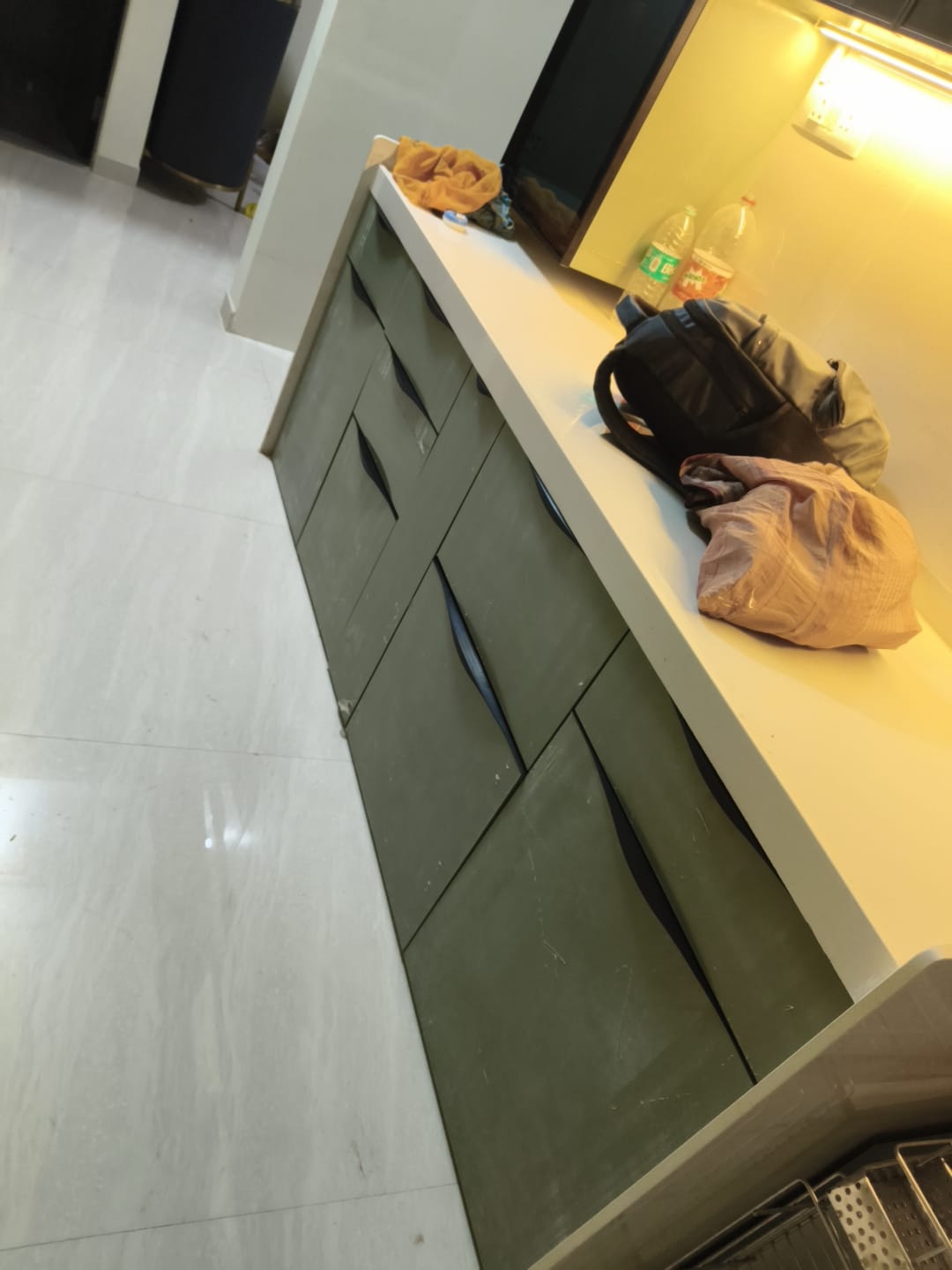 | Modular Kitchen Acrylic 1 View product → |
Frequently asked questions
What is an acrylic kitchen front made of?
An acrylic front consists of a solid acrylic sheet or an acrylic-faced panel bonded to MDF, HDF, HDHMR, plywood or another engineered-wood substrate. Acrylic is usually used on doors and drawer fronts, not throughout the cabinet structure.
How does acrylic compare with other kitchen finishes?
Acrylic delivers a deep, glossy appearance and strong colour clarity. Laminate usually offers more finish and texture choices with easier scratch tolerance, while PU-painted surfaces provide seamless colour but need careful maintenance and repair matching.
How can you test acrylic quality in a showroom?
Inspect the surface in angled light for waves, cloudiness and shade variation. Check whether edges are cleanly bonded, ask which substrate is used, examine the back of the panel and request the product brand, thickness and warranty details.
How should you care for an acrylic kitchen?
Wipe spills with a soft microfibre cloth and mild diluted detergent. Avoid scouring pads, abrasive powders, solvents and hard scraping tools. Keep kettles, ovens and hot pans from directing heat at the fronts, and dry water near exposed edges and sink cabinets.