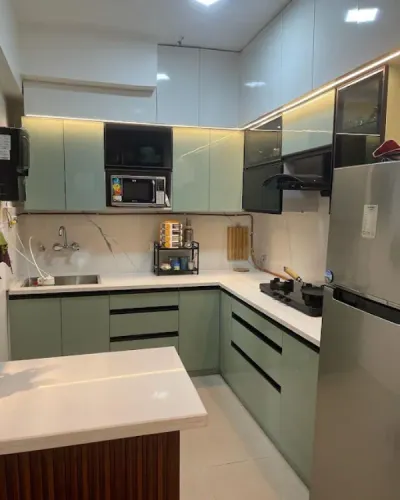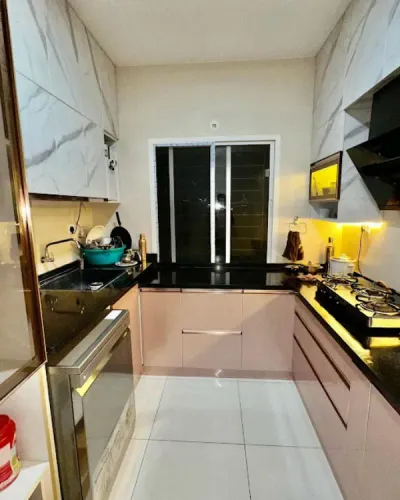
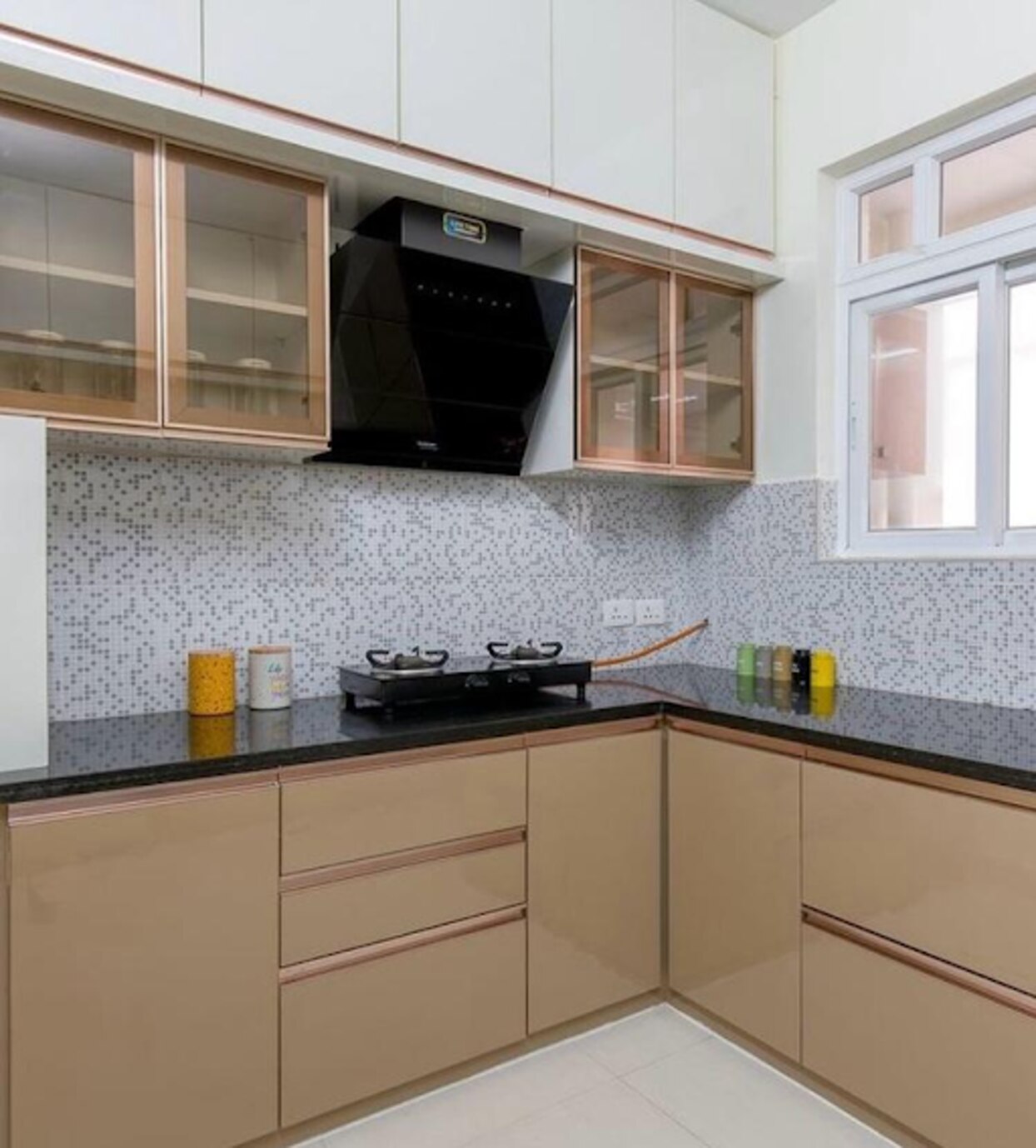
A manufacturer’s showroom, low quote or attractive 3D rendering does not prove that the finished kitchen will be well-built, correctly measured or properly installed. Use one documented brief, inspect construction and hardware closely, and put materials, site responsibilities, exclusions and warranty terms in writing before you approve fabrication.
Key takeaways
- Name one party accountable for design, manufacture and installation.
- Give every manufacturer identical measurements, appliances and storage requirements.
- Ask for cabinet core, finish, hardware and worktop specifications in writing.
- Make the quotation include installation, snag repairs and handover documents.
Verify Who Will Design, Manufacture and Install the Kitchen
Trace responsibility for design, manufacture and installation before comparing prices. A modular kitchen manufacturer may outsource one stage, but you need a named party accountable for the result, not a chain of contractors passing blame.
Ask who will take final site measurements, produce the layout, manufacture the cabinets and lead the installation. Request the factory or workshop address, photographs of current production, and the names of the installation team supervisor and project contact. Confirm whether the installer is employed, trained by the manufacturer, or hired through a subcontractor.
Use showroom inspection to examine more than door finishes. Open drawers, inspect cabinet backs and edge bands near the sink, and ask to see a completed kitchen rather than only display modules.
The manufacturer should explain its design and manufacturing capability, identify board thicknesses and edge-banding methods, and show how adjustable legs, plinths, fillers and scribe panels handle uneven walls and floors.
Get these responsibilities in writing:
- Who measures final dimensions and pays when incorrect measurements cause rework
- Who handles delivery, appliance fitting, countertop templating and site protection
- Who repairs installation damage, water ingress and manufacturing defects
- Warranty periods for carcasses, fronts, worktops and hardware separately
- Defect response time, removal and refitting coverage, and replacement-part availability
A low total price means little if demolition, plumbing alterations, electrical work, waste removal or upper-floor delivery sit outside the scope. Compare itemised quotations and make the same company responsible for correcting failures across all stages.
Give Every Manufacturer the Same Technical Brief
Send every manufacturer the same room measurements, appliance list and service-point information. Otherwise, one quotation may include fillers, panels and installation while another leaves them as extras.
Request these documents in the same format:
- A site survey recording wall lengths, ceiling height, floor levels, window and door swings, structural obstructions, plumbing points, electrical points, gas location and appliance model numbers.
- A scaled layout drawing showing plan view, elevations, cabinet widths, worktop height, appliance clearances, corner access, fillers, adjustable legs, plinths and scribe panels.
- A material schedule naming the board grade and thickness for carcasses, shutters, shelves, drawer bottoms and backs; the worktop construction; edge-band material and thickness; and moisture protection near the sink and dishwasher.
- A hardware list stating each hinge and drawer-runner brand or model, load rating, adjustment range, corrosion resistance, tested opening cycles, replacement availability and warranty.
- Finish samples labelled with the product name, laminate or veneer code, acrylic or membrane specification, edge treatment and colour. Do not compare “premium finish” against a named finish.
- An itemised quotation separating cabinets, hardware, worktops, fillers, panels, handles, delivery, installation, electrical or plumbing alterations and taxes.
Require the manufacturer to mark all assumptions and exclusions. The contract must state who takes final site dimensions and who pays if an incorrect measurement causes rework. Compare like with like: a polished drawing cannot compensate for missing construction details or an incomplete installation scope.
Question the Construction Materials and Finishes
A label such as BWP plywood does not prove that every panel is made from boiling-waterproof plywood. Ask for the board grade and thickness for each carcass panel, shelf, drawer bottom, back and shutter; these parts face different loads and water exposure.
1. Ask whether the carcass uses boiling-waterproof plywood, moisture-resistant MDF or particle board, and request the manufacturer’s product sheet. Moisture-resistant MDF and particle board can swell when water enters through cut edges, screw holes or joints. Check the sink cabinet, dishwasher-side panels and floor-level edges for sealed surfaces, not just a laminate face.
2. Specify each finish separately. For fronts, compare acrylic shutters, laminate, veneer and membrane shutters by scratch resistance, repairability, heat tolerance, colour consistency and replacement availability. A decorative finish does not make a moisture-sensitive core waterproof.
3. Ask for the edge-band material, thickness and bonding method. Insist that every exposed edge is covered, especially around the sink, dishwasher and floor. Examine corners and joints for gaps, lifting or visible board; these openings become swelling points after a leak.
4. Require the quotation to name back-panel thickness, shutter substrate, shelf construction and treatment for sink and appliance cut-outs. Ask to see a finished sample with its underside and edges exposed. If the answer is only “premium plywood” or “waterproof finish,” the specification is incomplete.
Assess Hardware, Worktops and Everyday Workmanship
Soft-close hinges prove only that a door slows before closing; they do not prove durability. Ask for each hinge and drawer slide’s brand or model, load rating, adjustment range, corrosion resistance, tested opening cycles, warranty and replacement parts availability.
- Check that tandem drawers run smoothly when fully loaded, remain level, and do not rack or scrape the cabinet.
- Open wide drawers, pantry pull-outs and lift-up doors under their intended load; the quoted load rating must include stored contents, not just the empty front.
- Compare corner mechanisms by usable internal dimensions, access opening and load rating. A carousel or magic corner that leaves difficult-to-reach dead space is not good value because the external cabinet width looks impressive.
- Confirm that heavy hardware is fixed through sound cabinet material, with wall fixing where the manufacturer specifies it.
Run your hand along every worktop edge and joint. Reject chipped laminate, uneven edging, swelling near the sink, open seams, visible adhesive and silicone gaps; check that appliance cut-outs are sealed and the worktop is supported across wide spans.
Inspect the factory finish in daylight: doors should have consistent colour, straight edges, tight edge banding and even gaps. Before final payment, operate every door and drawer, photograph defects, and record a written snag list.
Require separate warranty periods for hardware and worktops, plus clear responsibility for manufacturing defects, installation damage, water ingress and replacement-part supply.
Make the Quotation, Installation and Handover Accountable
Before final payment, put the complete scope, site assumptions and remedy deadlines in the agreement. The itemised quotation must identify cabinet units, countertop, sink, chimney and hob, delivery, installation, taxes, demolition and debris removal. State who pays for wall preparation, upper-floor carrying, appliance fitting, countertop templating, backsplash, plumbing electrical work and service alterations.
Whether you choose Nilkanth Modular Kitchen Interior - 9766310041 or another manufacturer, require the final site survey to record levels, obstructions, appliance models, gas location and every connection point.
| Cost area | Write into the agreement | Check before payment |
|---|---|---|
| Delivery and installation | Floor access, unloading, assembly, levelling, fillers, plinths and cleanup | Cabinets are stable; plinths do not move |
| Services | Pipe routes, dedicated circuits, sockets, stop valves, ventilation and appliance connections | Valves and switches remain reachable; appliances ventilate |
| Worktops and wet areas | Joint locations, cut-outs, edge finishing and silicone at sink and wall junctions | Joints are flush; no open gaps or sharp edges |
| Warranty | Separate periods for carcasses, fronts, hardware and worktops; response time; removal and refitting responsibility | Obtain the written warranty and service contact |
Inspect with the installer present and record photographs in a signed snag list:
- Align doors and drawers; test every runner under load and check uniform gaps.
- Confirm the refrigerator, oven, dishwasher, hob, filter and waste disposer have their required clearances.
- Run water at the sink, inspect leaks, and verify drain access.
- Withhold the balance until each listed defect has an owner and completion date.
Related products
 | Modular Kitchen We offer Modular Kitchen that finds wide application in domestic as well as commercial kitchen set ups. View product → |
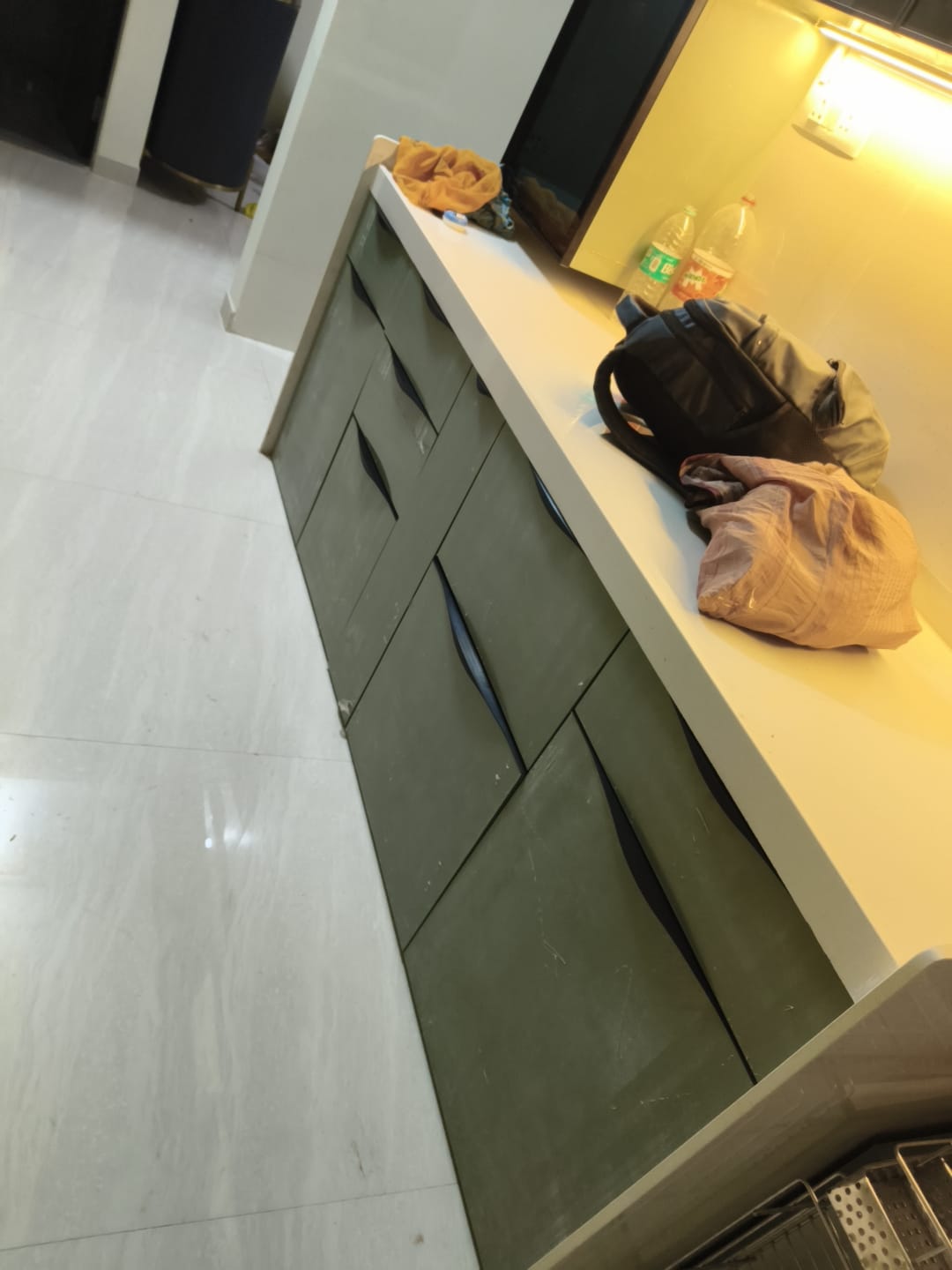 | Modular Kitchen Acrylic 1 View product → |
Frequently asked questions
Who should be accountable for a modular kitchen project?
Choose a named party responsible for design, manufacture and installation, even when the manufacturer outsources one stage.
What should you give each modular kitchen manufacturer before comparing quotations?
Give every manufacturer the same technical brief, including room measurements, appliance details, storage needs, finishes and installation requirements.
Which construction materials and finishes should you question?
Ask for the cabinet core material, thickness, edge treatment, finish type and moisture-resistant areas in writing rather than accepting broad labels.
What should you check in kitchen hardware and worktops?
Assess drawer runners, hinges, lift-up mechanisms, worktop joints, edge finishing and the workmanship on doors, panels and fillers.
What should a modular kitchen quotation and handover include?
Require itemised scope, installation responsibility, delivery timing, exclusions, snag repairs, warranty terms and handover records.