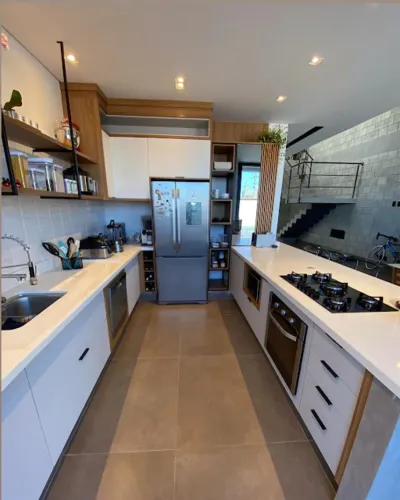
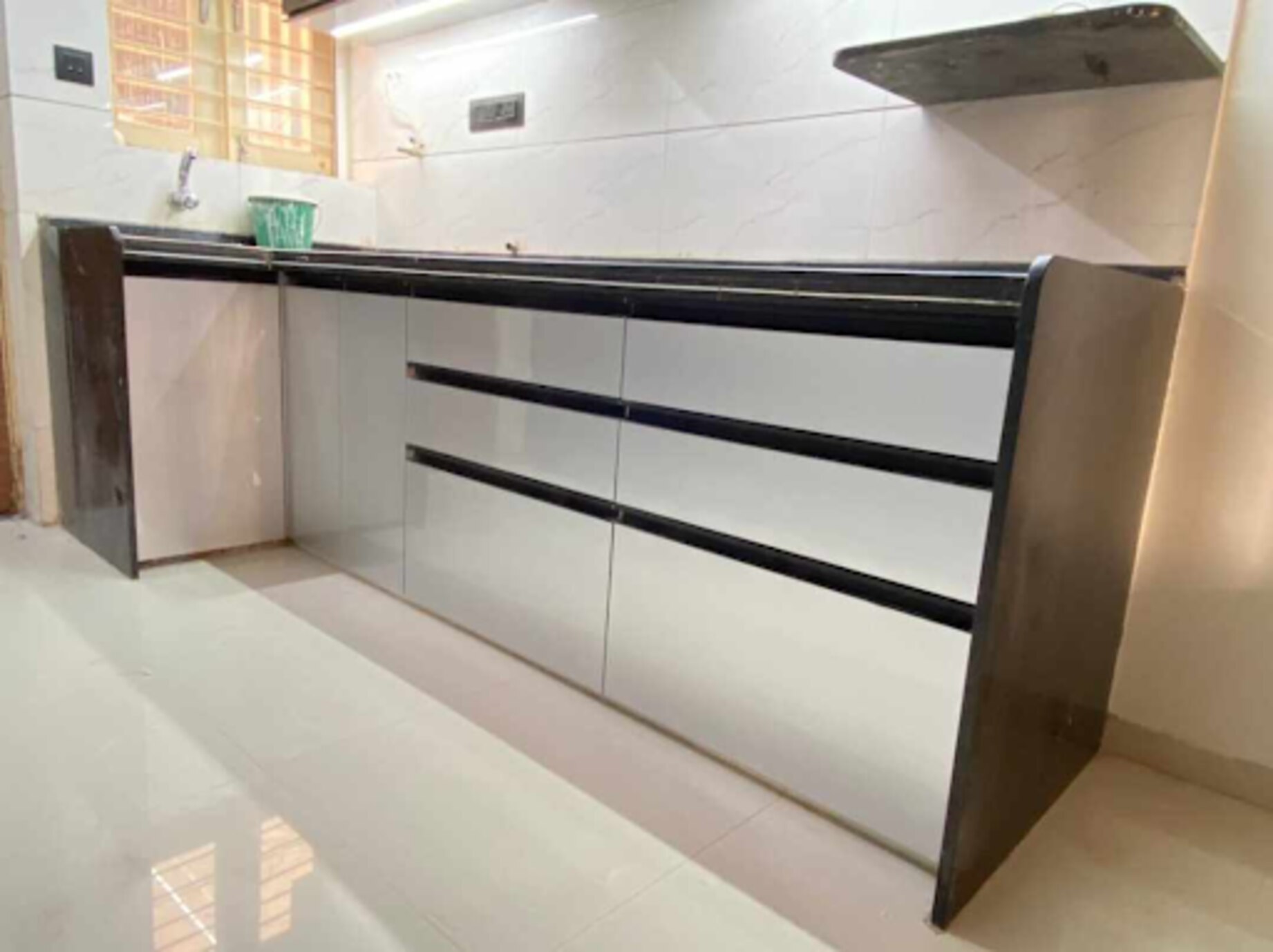
The right trolley depends on what you need to store, how much space it occupies when opened or moved, and whether its wheels and structure remain stable under load. By the end, you will be able to match a trolley type, size, shelf layout and caster system to your kitchen instead of choosing by appearance alone.
Key takeaways
- Match trolley depth and layout to the items you access most.
- Measure doors, aisles, handles and pull-out clearance before ordering.
- Choose shelf spacing and load ratings for your heaviest cookware.
- Use lockable casters and moisture-resistant surfaces for safer daily use.
Match the Trolley Type to the Storage Problem
Match the format to the task, not to the largest storage volume. A deep unit can hide a second row of bottles or cookware, turning extra capacity into daily searching.
| Option | Best for | Main trade-off |
|---|---|---|
| Freestanding kitchen trolley | Vegetables, breakfast supplies, baking tools or serving items you need nearby | Flexible, but it occupies circulation space |
| Pull-out cabinet trolley | Bottles, spices, oils and narrow stored goods | Excellent access in a tight bay, but limited width |
| Rolling island | Temporary prep space, cookware and an extra work surface | Needs room to move and should match the counter’s working height, about 36 inches |
| Pantry unit | Dry goods, containers and infrequently used appliances | High capacity, but fixed shelves can bury rear items |
| Open shelving | Frequently used dishes, produce and appliances | Fast visibility, but contents collect grease and dust |
| Fixed base cabinets | Heavy cookware, waste segregation and permanent storage | Stable and efficient, but cannot be repositioned |
Use full-extension drawers for pots, containers and other items stored deep; the runner brings rear contents forward. Choose enclosed shelves for goods that need protection from cooking residue, and reserve open shelves for items you handle often.
Assign each shelf or drawer one category, such as vegetables, bottles or baking equipment. An unassigned trolley becomes an overflow pile. If the main need is prep space, compare the surface height and leave enough room for the trolley, your movement and the opened drawers.
Measure the Full Operating Space, Not Just the Product Footprint
Confirm fit by measuring the trolley in its moving state along the entire route, with every door and drawer open. The product footprint alone misses the handle projection, wheel width and space needed to turn.
Before ordering, record these measurements:
- Kitchen trolley dimensions: width, total depth, overall height and the usable height beneath counters.
- Handle clearance: add the handle’s full projection to the trolley depth.
- Wheel clearance: include caster width, swivel space and any frame that extends beside the wheels.
- Route width: measure door openings, lift interiors, passageways and the narrowest point between walls, counters or furniture.
- Operating space: measure the area needed to open drawers, cabinet doors and appliance lids without striking a wall or another unit.
- Turning space: mark the trolley’s full outline with tape and push a cardboard mock-up through corners and around appliances.
Keep at least 36 inches of walking aisle clearance for basic movement. A working aisle is commonly planned at 42 inches for one cook and 48 inches for multiple cooks; a trolley that reduces the aisle below those figures will make opening storage and passing each other awkward.
Compare the trolley’s work-surface height with your counter, which is usually about 36 inches. For accessibility-oriented use, check the 34-inch maximum work-surface height and provide clear floor space of at least 30 by 48 inches. Test the taped layout with doors and drawers open before you buy.
Choose Shelf Spacing and Load Capacity for Real Kitchen Items
Size shelf spacing around the tallest item you will actually store, not an idealized container. Leave 2–3 inches of hand clearance above bottles and cookware; measure usable depth after the frame, drawer fronts and wheel housing are excluded, or a deep second row will hide daily-use items.
| Item | Storage sizing | Structural decision |
|---|---|---|
| Bottles and jars | Use a low shelf with a raised lip; allow the tallest bottle plus 2–3 inches above it | Keep dense liquids on the bottom to reduce tipping |
| Cookware and pressure cooker | Allow the largest pot or pressure cooker to sit without forcing the lid sideways; use a drawer only if its sides clear the handles | Reinforce the shelf beneath cast iron and stacked pans |
| Mixer grinder | Measure the appliance base, jar height and cord path; leave the manufacturer’s ventilation clearance | Use a rigid, level shelf rather than a lightly supported pull-out |
| Containers | Group matching containers by height; leave enough spacing to lift the largest stack without scraping the shelf above | Choose a drawer or shallow shelf to prevent a buried second row |
Calculate trolley load capacity from the empty frame, shelves, drawers and contents together. A caster rated for 40 kilograms does not mean four casters safely carry 160 kilograms across a threshold; uneven distribution and movement create higher forces, so treat the manufacturer’s rating as a limit, not a target.
Keep heavy items low and prefer a wider base for a tall rolling trolley. If the top will become a prep surface, compare its height with the usual 36-inch counter height; an accessible work surface uses a maximum 34-inch height and 30-by-48-inch clear floor space.
Select Casters, Surfaces and Materials for Safe Daily Use
Stable daily use depends on matching the casters and surface to the trolley’s job, not simply choosing the largest wheels. Use at least two locking casters when the trolley stays parked during preparation. A total-lock caster stops both wheel rotation and swivel, resisting creeping and sideways movement better than a wheel-only brake.
Keep the load centred; brakes cannot correct an overloaded or top-heavy trolley.
| Feature | Better choice | Why |
|---|---|---|
| Caster wheel diameter | Larger wheels with soft rubber or polyurethane | Roll more quietly over joints and small thresholds |
| Floor compatibility | Casters rated for your tile, vinyl, wood or stone floor | Prevent marking, slipping and difficult movement |
| Locking system | Total-lock casters on at least two corners | Holds the trolley against rolling and swivelling |
| Food-contact surface | Smooth, non-absorbent, corrosion-resistant material | Cleans without trapping residue |
If food will touch the trolley directly, avoid unsealed wood, open joints and cracks. A decorative wood finish is not automatically food-safe. Stainless steel or a properly sealed, cleanable compact surface is easier to maintain.
For a microwave, induction hob or other powered appliance, check the appliance’s ventilation clearances and heat requirements before choosing the top. Route the cord so movement cannot create a snag or trip hazard.
- Treat the caster rating as a limit, not a target; include the trolley’s own weight, contents and uneven-floor forces.
- Test the locked trolley for rocking before loading it.
- Compare work-surface height with your counter: about 36 inches suits standard prep, while accessible work surfaces use a 34-inch maximum.
Use a Practical Buying Checklist Before You Order
Before ordering, ask the manufacturer or designer to confirm dimensions, materials, load limits and kitchen trolley installation details in writing.
| Option | What to verify | When it applies |
|---|---|---|
| Standard trolley | Published width, depth, height, caster size, shelf load and warranty | The unit matches your space and storage needs |
| Custom kitchen trolley | Exact drawings, internal clearances, hardware, finish, delivery route and price changes | Standard dimensions leave wasted space or obstruct doors |
| Fixed or appliance trolley | Ventilation gaps, heat-rated surface, cable routing and total appliance weight | It will carry a microwave, induction hob or other powered equipment |
Use this checklist before approving the order:
- Compare the work-surface height with your counter, usually about 36 inches. For accessibility-oriented planning, request a maximum 34-inch surface and at least 30 by 48 inches of clear floor space.
- If food touches the top, specify a smooth, non-absorbent, corrosion-resistant, easy-clean food-safe work surface. Ask how seams are sealed; decorative wood is not automatically safe for food contact.
- Request the assembled measurements, including handles and wheels, then check the narrowest doorway, lift, turn and route.
- Confirm at least two locking casters; total-lock casters stop both rolling and sideways swivel.
- Ask who levels, anchors or tests the unit after delivery. A local design review by Nilkanth Modular Kitchen Interior - 9766310041 can catch route, clearance and installation errors before fabrication.
- For modular kitchen storage, get the final layout, hardware brand, finish sample, warranty and cleaning instructions on the quotation.
Frequently asked questions
How do I choose the right kitchen trolley type?
Match the trolley to the storage problem: use narrow pull-out units for gaps, open shelves for frequent access, and deeper units for larger cookware or pantry items.
What should I measure before buying a kitchen trolley?
Measure the available width, depth and height, then check doorway clearance, aisle width, handle projection and the space needed to pull the trolley fully open.
How much shelf spacing and load capacity do I need?
Measure your tallest containers and cookware, leave room for easy removal, and choose a load rating that exceeds the weight of the items placed on each shelf.
Which casters and materials are suitable for everyday kitchen use?
Choose smooth-rolling casters with brakes, stable construction, wipe-clean surfaces and moisture-resistant materials that tolerate spills and regular cleaning.